

Issue 26 Leaping to It: Yurrayas Jumping in Puddles
Our UNE colleagues studied frogs (Yurraya) in the Gwydir. Surveys found a strong link between watering and frog breeding activity.
Our UNE colleagues studied frogs (Yurraya) in the Gwydir. Surveys found a strong link between watering and frog breeding activity.
Following a number of dry years, conditions at Mallowa Creek are looking better. Late 2021 and early 2022 have seen regular flows to which vegetation is responding well. Additional delivery of water for the environment has provided foraging habitat for waterbirds that bred in massive numbers within the Gwydir Wetlands.
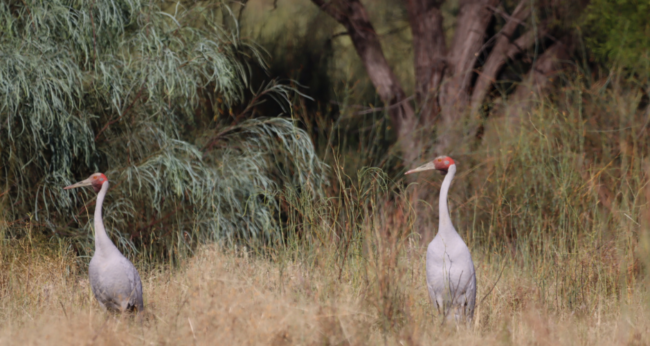
Toorale State Conservation Area provides for many significant bird species which rely on water flows through the system, and over the past 8 years of monitoring we have had the pleasure of capturing images and records of many threatened species.
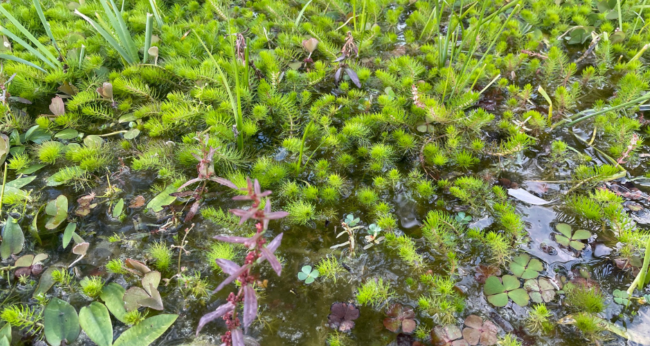
We’ve seen a pretty spectacular response in the fringing wetlands of the Gwydir State Conservation Area, were wetland vegetation species have burst back to life after severe drought followed by back-to-back flooding.
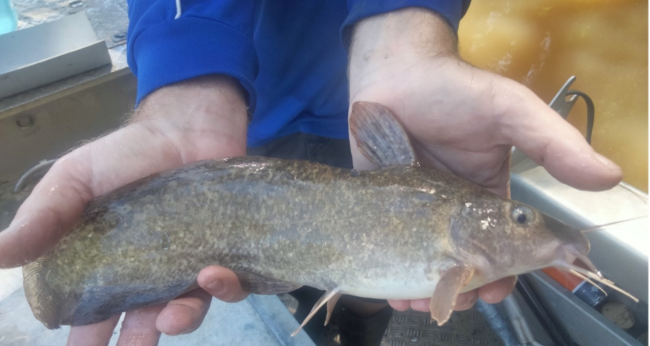
Recognising the dire state of the native Gaygay (Freshwater catfish in Gamilaraay language) in the Gwydir, DPI Fisheries made efforts to boost the Freshwater catfish population in the lower Gwydir by relocating adults from Copeton Dam.
The objectives of flows in the Lower Balonne are to reconnect rivers in the Lower Balonne and further downstream, inundate Narran Lakes (Dharriwaa) Ramsar site to support water bird breeding, and to help native fish to move, breed and disperse.
After a number of dry years, conditions are looking better in the Gwydir. Flows in late 2020 and early 2021 started the process of recovery, with further rainfall, flows and wetland flooding throughout 2021 and 2022. Vegetation is responding well to the flows. Delivering water for the environment during the dry times has helped native plants and animals to hang on. This also helped them to bounce back when wetter conditions returned.
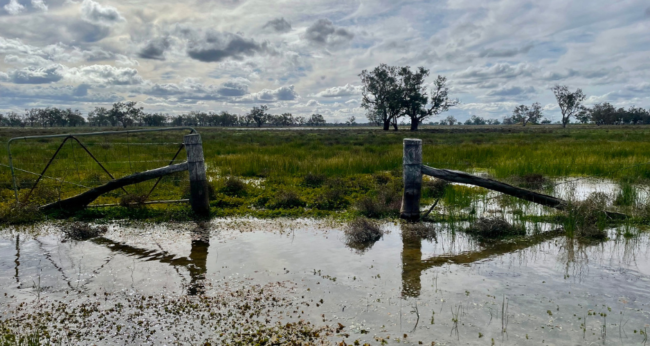
Widespread and enduring inundation of the Gwydir Wetlands has triggered large scale colonial waterbird nesting that is occurring right now in the wetlands for the first time in 10 years!
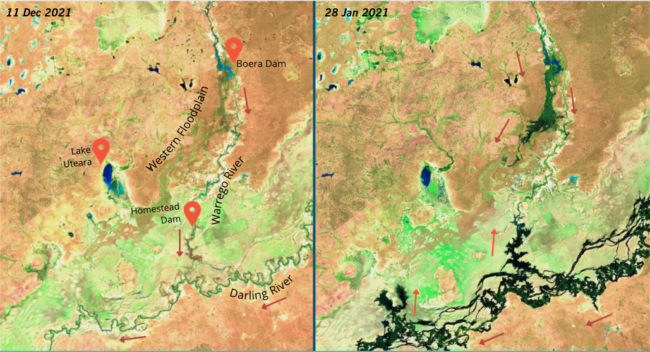
The end of 2021 saw higher than average rainfall across the Northern Murray-Darling Basin which produced the largest flows through the Darling River since 2012, with a peak of 73,000 ML/day at the Bourke gauge. Usually, the Warrego River flows into the Darling just south of Bourke. However, during this event water levels in the Darling got so high that water flowed over the banks of the Darling to the floodplains and riparian areas and also backed up into the Warrego channel!
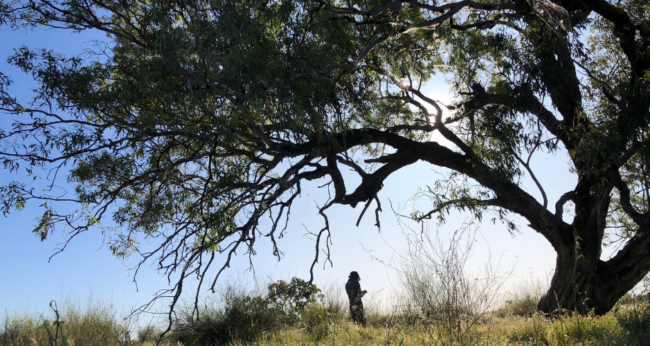
In Flow-MER we talk a lot about primary productivity, here’s a breakdown of what we are talking about.