Water for the Environment – 2021-22 Planning Overview
The Commonwealth Environmental Water Office is planning their use of water for the environment in 2021-22. Click HERE to read the northern Murray-Darling Basin planning overview.
Cycles of ‘boom’ and ‘bust’ periods dominate the Gwydir floodplain. Longer dry periods are often broken by flooding rains. The past several years have been one of those very dry spells for the Gwydir, a bust. However, the current ‘boom’ will help to rejuvenate the landscape and community after the long dry.
Exciting news! 2rog will be developing the Armidale Regional Council Catchment Water Quality Strategic Plan. We’re looking forward to this project, read a little more about it HERE.
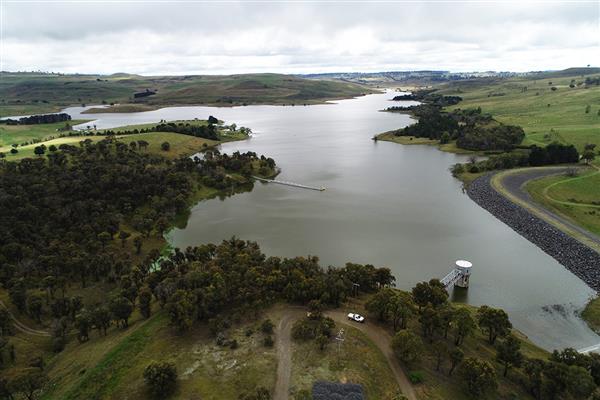
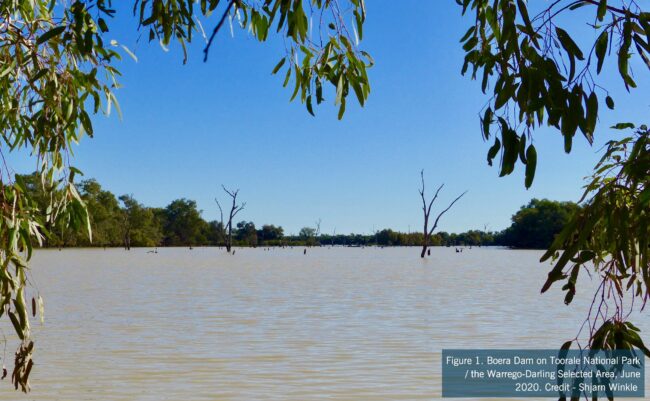
The Department of Planning, Industry and Environment is preparing for the construction of new and upgraded water infrastructure at Homestead and Boera dams. Following extensive studies and consultation, both Boera and Homestead dams will be retained and modified to provide improved flow management in the Warrego and Darling rivers, while protecting important cultural and environmental values on the Toorale National Park and State Conservation Area (Toorale).
Over the last few weeks the 2rog crew took some time out of the work week to to step into the outdoors.
Traversing mountains and national parks, click here to see where the rogers roamed.
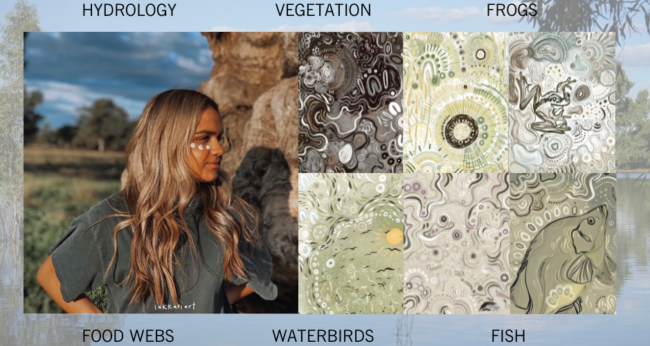
Last year we shared an art series produced by Gamilaroi artist, Lakkari Pitt, that beautifully captured the Flow-MER program ecological indicators shown in the image above.
This time we want to share a little more about the artist herself. Lakkari discusses family, connection to Country and traditional knowledge in our feature Q&A that we’re excited to share for NAIDOC week, 2021.
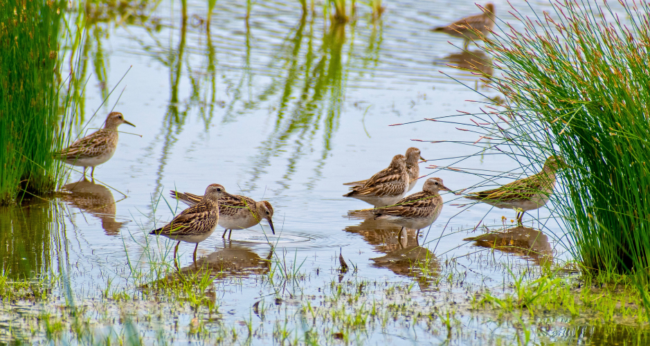
The Warrego River and its associated wetlands, including the Western Floodplain, occasionally host a suite of international migratory waterbirds. These birds are seasonal vistors who make epic journeys across the globe to visit Australia, and they depend on healthy wetlands to do so.
There is lots to learn about migratory birds. Where do they come from and why? How do they navigate? And how often do they execute mammoth migrations between the north and south poles?
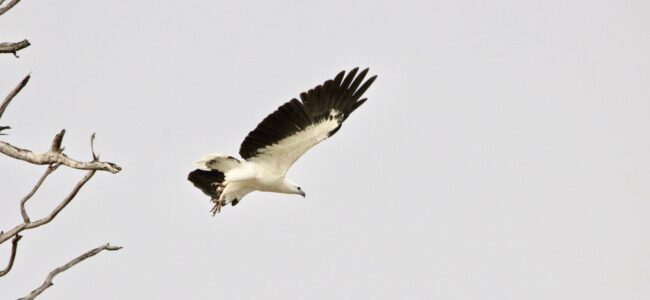
If you stand in just the right spot on the bank of Boera Dam in the Toorale State Conservation Area (SCA) and look to the trees in the east, you will spot a very large mass of twigs and sticks neatly curated into a large bowl shape. When our bird expert, Steve Debus, spotted this mass his interest was piqued. He raised his binoculars to have a good look and immediately identified a white-bellied sea eagle (Haliaeetus leucogaster) nest. This is the furthest west in NSW that Steve had ever seen or heard of a white-bellied sea eagle nest with a breeding pair. Given that Steve is a raptor expert with about 40 years of experience, this observation is probably unique.
Environmental water managers have protected a portion of the flows following rainfall and flows into the Barwon-Darling during March and April 2021. The additional flows will help native fish to travel along the Barwon-Darling to improve opportunities for them to feed and breed. An update is available here.
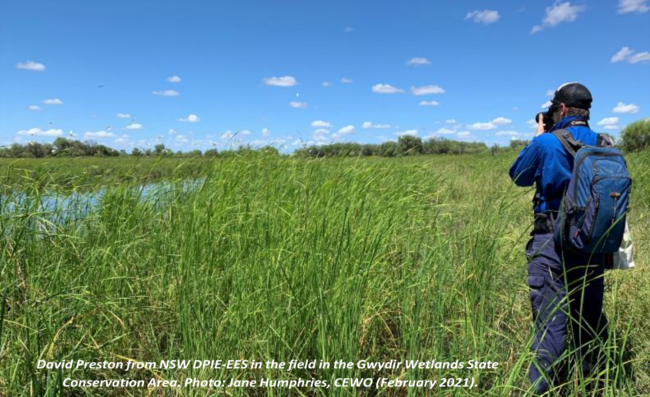
ver the summer of 2020-21, around 23 GL of water for the environment was delivered across the Lower Gwydir, Gingham and Mallowa Creek systems within the Gwydir Valley and downstream.
In combination with natural flows, water for the environment helped improve the condition of the Gwydir Wetlands Ramsar sites located on ‘Old Dromana’ and ‘Goddard’s Lease’. They also provided habitat for a range of waterbirds, fish, frogs, and turtles after an extended dry period.